
National Study on Leading The Human Side of AI Adoption in the Workforce
Breakthrough National Study of AI Adoption Mindset, Behaviors, and Strategies
This national study focuses on the behaviors and mindsets that determine AI adoption and results in organizations. It includes the missing perspective on AI from executives, leaders, and employees. This national study features 1,000 employed Americans who have used AI as part of their job in the last year. The findings provide the missing perspective and accurate answers to increase AI adoption, usage, and enthusiasm across organizations.
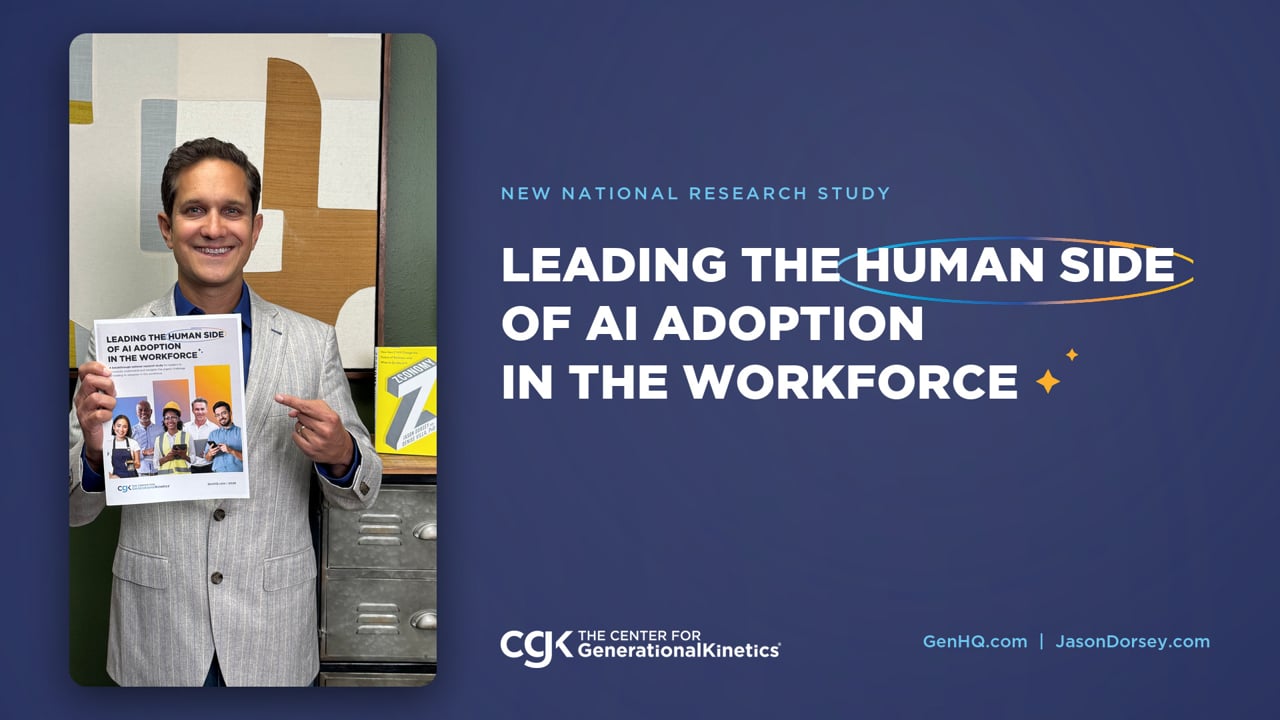
CGK Is Thrilled to Release Our Latest Study
The study findings highlighted on this page are only a preview of the great discoveries you’ll uncover in the full 38-page research report.
Download the study report to learn which leadership characteristics most influence the workforce’s view of AI adoption, where unexpected resistance to AI is affecting results, and the fastest way leaders can build trust to drive better workforce outcomes fast.
You’ll also get discussion questions for each key insight so your leadership team can quickly advance conversations, make better decisions, and take more effective action.
Five Featured Study Findings
- 78% of U.S. workers using AI on the job say that if AI increases their productivity, they should be paid more
- Almost half of U.S. workers using AI on the job (46%) wish AI had never happened
- 35% of the U.S. workforce who have used AI at work do not trust their organization's leaders when it comes to AI plans
- 80% of executives are enthusiastic about AI at work compared with 68% of managers and just 46% of employees
- 59% of the U.S. workforce that has used AI at work say AI will become the most important job skill within one year
Study Author Perspective
“The national study revealed a complex, highly emotional range of views toward AI adoption at work from those who have actually used AI in their job in the last year.
The intensity of the responses—from enthusiasm for AI to fear of its consequences—highlights the importance of leaders strategically guiding the AI conversation and implementation within their organization.
The study also reveals that the AI results gap is less a technology gap and more a gap in change management and technology adoption that can be bridged through specific actions, planning, training, and approaches that leaders need to know and use today.
We could not be more excited by the unexpected, actionable nature of the findings from the study and the ability for leaders to act on the discoveries today.”
Jason Dorsey, President and Lead Researcher
The Center for Generational Kinetics
Co-Author of Zconomy and The State of Gen Z Annual Study
Enthusiasm About Using AI at Work, by Role
Very or somewhat enthusiastic attitude toward using AI in their job
Hidden AI Enthusiasm
The study reveals an important finding for leaders that headlines about AI not delivering on its promise too often overlook. The study found that a majority of the U.S. workforce (57%) who have used AI as part of their job in the last year are enthusiastic about continuing to use AI.
The study also found meaningful fear around AI usage and the unknowns that come with revolutionary technology, but it also revealed genuine enthusiasm and optimism that leaders can build on to create new AI usage habits, behaviors, and measurable outcomes. In fact, 71% of all study participants think AI will be the biggest technology change of their lifetime!
Most importantly, the study found a significant perception gap about AI based on job role and responsibility. Specifically, 80% of executives are enthusiastic about AI, compared with 68% of managers and 46% of employees. This enthusiasm gap creates a divide that organizations must address through change leadership and effective messaging to unlock AI results.
The Top Four Fears Working Americans Feel About AI Adoption
By total; top three box (extreme/strong/moderate fear)
Fear Toward AI Usage at Work Is Revealed
AI represents significant potential change for the workforce, from removing repetitive tasks to inspiring creativity and agents taking over specific roles. The amount of change AI represents can create a range of emotions within the workforce, including fear. To understand how much fear the workforce feels about AI adoption, the study asked about the top fears U.S. workers who have used AI as part of their job in the last year are experiencing.
The study participants ranked four fears at the top: losing a job now means struggling to find another, their organization losing critical thinking and creative skills, the environmental cost of AI, and watching colleagues lose their jobs.
The fear about AI extends beyond individual job roles. 67% of all study participants think AI will create significant unemployment around the world, and 62% think AI is being used as an excuse to let go of employees an organization might otherwise struggle to fire.
Given these fears, leaders need to recognize the level of fear that exists today and take specific actions to address it in their messaging, strategies, and approach to AI adoption.
Our Research Insights Have Been Featured On















Request a Media Interview About AI Trends
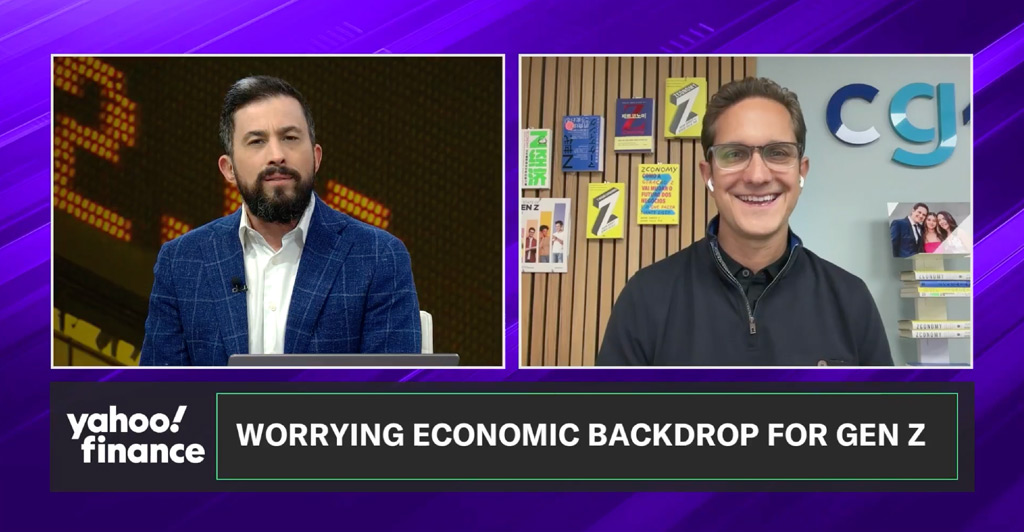
Jason Dorsey is the leading generations and behavioral researcher trusted by more than 200 media outlets. His insights on Gen Z, the workforce, and emerging trends have been featured on 60 Minutes, CNBC, The Today Show, and in The New York Times.
Jason is known for bringing data-driven insights and perspectives that answer must-know generational questions.
For interviews about the latest news and events shaping Gen Z, or expert commentary on this year’s findings, request an interview with Jason below.
The Five Most Effective Actions to Increase Trust in AI in the Workforce
By total; ranked #1/#2/#3; top 5 of 10 tested
What Builds Trust and AI Adoption in the Workforce
The study explored ten actions organizations use to build trust in how they implement AI adoption. Study participants identified five actions that stood out as leading to increased trust about AI usage in the workforce.
All five actions identified are no-cost or low-cost and can build the trust needed for buy-in, momentum, and results at this critical time for AI’s emergence in the workforce.
The five actions included: being transparent about where AI will not be used, communicating the strategy with real detail and timelines, explaining how AI makes a job more stable, involving employees before a rollout, and helping people understand how AI works in their role.
The action that ranked last of the ten is the one many organizations lead with: showing how executives personally use and learn AI, at 20%. The workforce is far more interested in what AI means for them than in how their leaders use AI in their own jobs.
The same pattern holds for individual skill-building. Asked to pick from twelve actions that can build an AI skill set and unlock talent, three stood out: role-specific AI learning plans, one-on-one training, and access to a coach.
The lowest-scoring of all twelve AI skill-building actions was gamifying AI adoption with challenges and milestones, at 18%.
In a key finding, 66% of the U.S. workforce who have used AI at work in the last year said that eliminating a five-minute task they hate would increase their AI use, which is an action a leader can roll out immediately.
Wish AI Had Never Happened
Almost half of U.S. workers who have used AI in the last year...
Alongside genuine enthusiasm about AI, almost half of the workforce wishes AI had never happened at all. The insight: the workforce often holds two different feelings about AI at once, which is exactly the challenge leaders have to navigate.
Who Is Losing Sleep Over AI
Have lost sleep worrying about how AI might affect them
Bring Our Discoveries to Your Meeting or Event
Jason Dorsey brings his groundbreaking research insights from Leading the Human Side of AI to life through his inspiring keynotes for leaders worldwide.
Jason’s engaging, story-filled presentations help leaders across industries understand how to Lead the Human Side of AI in their organization in a way that unlocks the talent of their greatest asset: their people.
This presentation reveals how rapidly changing AI expectations are reshaping work, trust, performance, and communication, and exactly what leaders can do right now to transform AI promise into people-led results.
From keynotes and annual meetings to board presentations and leadership retreats, Jason delivers research-backed strategies that spark connection, action, and lasting impact. Jason has received over 1,000 standing ovations for his unique approach to insights and bringing out the best in people.
Reach out now to learn about Jason Dorsey’s customized keynote presentations and content-rich interactive programs.
Jason Sharing Research Findings
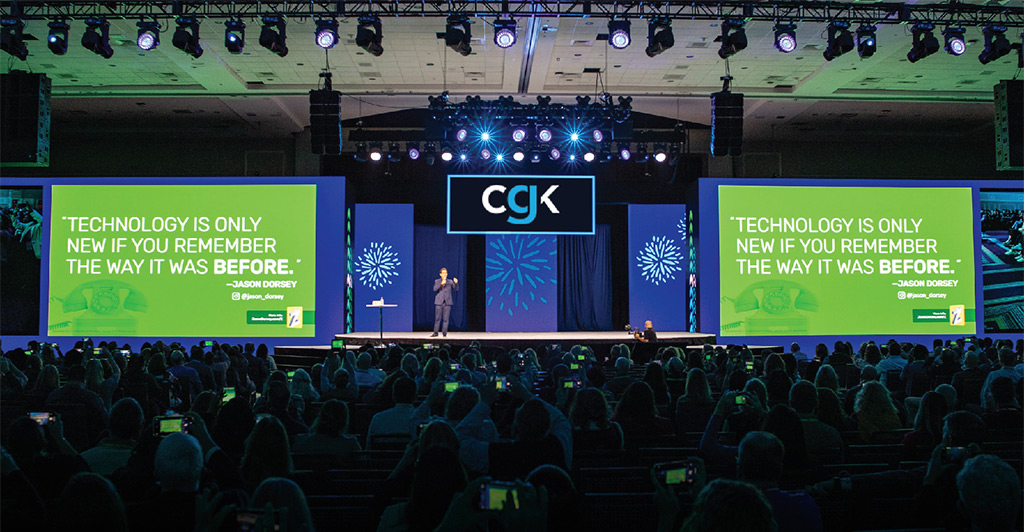
From global stages to executive briefings, Jason Dorsey brings The Human Side of AI and more than 200 additional CGK studies to life—turning research insights into stories and strategies leaders can act on right now.
National Research Study Methodology
The Leading the Human Side of AI research report was based on a first-of-its-kind national study by CGK of 1,000 employed Americans who had used AI tools as part of their job in the prior 12 months. The study was weighted to the 2020 U.S. Census for age, gender, region, and ethnicity. The study’s margin of error is ±3.1%. All comparisons described as significant in the research report are tested at the 95% confidence level.
Generational references used in the research report are based on the following age brackets and percentages: Gen Z (18–30) 33% · Millennials (31–46) 33% · Gen X (47–60) 27% · Baby Boomers (61–65) 7%. The gender composition was Female 51% · Male 48% · Non-binary or prefer not to answer <1%. The regional distribution of study participants was: South 39% · West 23% · Midwest 21% · Northeast 17%.
The Center for Generational Kinetics (CGK)
The Center for Generational Kinetics (CGK) is the leading research, advisory, and keynote speaking firm focused on generations and must-know behavioral trends reshaping business and our world, such as AI.
CGK helps companies and leaders worldwide solve workforce challenges, grow with hidden consumer trends, and drive bottom-line growth through original research, strategy, and insights that deliver measurable results.
CGK released Leading the Human Side of AI to spark data-driven conversations about the intersection of the workforce, AI’s emergence, and the future of work. Learn more about CGK’s custom research and keynote speaking solutions at GenHQ.com.

Download the Full Research Findings Report
Download the full Leading the Human Side of AI Adoption in the Workforce study for data-driven insights you can use to strengthen trust, adoption, and AI usage results across your entire workforce.
In the research report, you’ll discover:
- How the workforce perceives their coworkers’ views about AI, and the outsized influence that perception can have
- The two areas where workforce trust in leadership runs thinnest, out of nine areas the study explored
- Eye-opening insights into the adoption strategies the workforce says fast-track AI usage and keep the momentum going
And much more! Download today and start applying the insights and actions right away.
Trusted by over 700 clients












Questions Leaders Ask About the Leading the Human Side of AI in the Workforce Research
Why is AI adoption not living up to its promise in many organizations?
The reason is often not the technology, but the people-side of the AI implementation and usage. In CGK's 2026 national study of 1,000 U.S. workers who are already using AI on the job, 35% said they do not trust their organization's leaders when it comes to their AI plans, and the actions that moved trust most were about transparency rather than skill set. Unlocking the promise of AI starts with winning the trust and buy-in of those who will be using AI in their jobs.
What do employees fear most about AI at work?
The workforce identified four specific fears they have about AI at work. The four fears are both personal and professional, which means they carry a strong emotional weight. The top four fears toward AI at work that were uncovered in the study are: losing a job now means struggling to find another (57%), that their organization will lose critical thinking and creative skills (57%), the environmental cost of AI (54%), and watching colleagues lose their jobs (52%).
Are any employees enthusiastic about AI?
Yes! In fact, the study found that a majority of the entire U.S. workforce (57%) who have used AI as part of their job in the past year are enthusiastic about using AI at work. The study found that the enthusiasm level for AI at work varies significantly by job role, with 80% of executives, 68% of managers and 46% of employees expressing enthusiasm for AI. Even more eye-opening, 71% of the U.S. workforce who have used AI as part of their job in the past year think AI will be the biggest technology change of their lifetime. However, that strong enthusiasm is not evenly held.
Who is most stressed about AI usage at work?
The answer might surprise you. The study found executives are the most stressed about AI usage at work, with 52% of executives report losing sleep over AI, compared to 31% of managers and 26% of employees. The anxiety towards AI usage at work might be reflected at the frontlines, but the executive office is feeling it the most right now.
How do you build employee trust in AI usage at work?
CGK explored ten different actions that organizations are known to use to try to increase trust in AI usage in the workplace. The five actions that proved to be best from the perception of the workforce are: saying where AI will not be used (37%), communicating strategy with real detail and timelines (34%), explaining how AI makes a job more stable (32%), involving employees before a rollout (32%), and showing how AI fits their own role (32%). The great news is that all five actions are no-cost or low-cost and can be implemented right away. The action organizations take to build trust that was least effective of all ten options tested was showing how executives personally use AI (20%).
What is the fastest way to increase AI usage in your organization?
Solve a challenge that affects employees on a daily basis. The study found that 66% of U.S. workers using AI agreed that eliminating a five-minute task they hate, by using AI, would increase how much they use AI in their work. This is the lowest-cost starting point the study found to increase AI usage and adoption.